

How Parents Can Help Their Child Overcome Maths Anxiety
If the concept of mathematics anxiety is new to you, we recommend starting with our blog series, When Maths Triggers Anxiety, where we explain what maths anxiety is and how it shows up. You can read the first post in the series here.
For many children, mathematics anxiety is very real. A racing heart before a test, tears over homework, or the familiar phrase “I’m just bad at maths” can leave parents feeling worried and unsure how to help. The good news is that parents play a powerful role in reducing maths anxiety and it starts with responding to emotions.
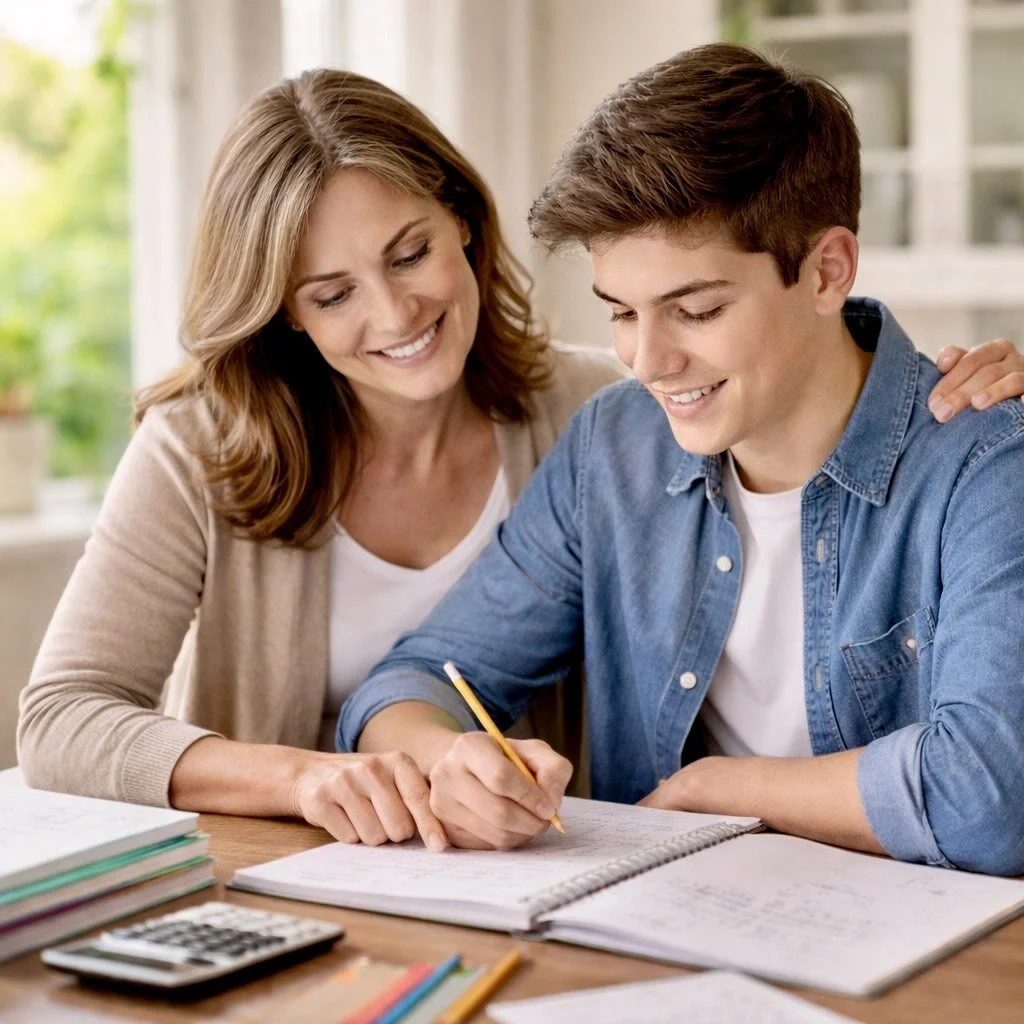
Below is a simple, research-informed approach you can use at home to help your child feel calmer, safer, and more confident when facing mathematics challenges.
Step 1: Respond to the Emotion First
When a child feels anxious, their brain is in survival mode. Learning cannot happen effectively until they feel calm and safe. Before correcting mistakes or offering solutions, focus first on emotional regulation.
1. Offer Comfort Through Bodily Contact
For younger children especially, gentle physical reassurance can be grounding. A hug, sitting close together, or a hand on the shoulder sends a clear message: “You are safe, and I’m here.” This physical connection can quickly reduce stress and help your child feel supported.
2. Model a Calm Presence
Children often “borrow” emotional cues from adults. If a parent appears tense or frustrated, anxiety can increase. Try to adopt a relaxed posture, slow movements, and a calm tone of voice, even if you’re feeling concerned inside. Your calmness teaches your child how to stay calm too.
3. Use Breathing to Settle the Body
Deep breathing is one of the simplest and most effective anxiety-reduction tools.
Encourage slow breaths in through the nose and out through the mouth
Try counting together (inhale for 4, exhale for 6)
Make it playful, pretend to blow up a balloon or blow out candles
Breathing helps signal to the brain that the danger has passed.
4. Release Tension Through Muscles
Anxiety often shows up as tight shoulders, clenched fists, or a rigid posture. You can guide your child through a quick muscle exercise:
Tighten muscles for 5 seconds
Release and relax
Notice how the body feels afterward
This helps children become aware of tension and learn how to let it go.
5. Gently Redirect Attention
When anxiety spirals, attention becomes stuck on fear. Briefly shifting focus —stretching, getting a glass of water, or stepping outside — can help reset the nervous system before returning to the task.
6. Encourage Positive Self-Talk
Children with maths anxiety often have an inner voice that says, “I can’t do this” or “I’ll never understand.” Help them practice kinder, more realistic thoughts such as:
“This is hard, but I can try step by step.”
“Making mistakes helps me learn.”
“I don’t need to be perfect to improve.”
At first, your child may need to hear these words from you before they can say them themselves.
Step 2: Understand the Situation and Problem-Solve Together
Once your child is calm, their thinking brain is ready to engage. Now it’s time to talk— not to lecture, but to understand.
1. Explore the Reason Behind the Emotion
Ask open, curious questions:
“What part of this feels hardest?”
“What were you thinking when you started to feel upset?”
“Has something like this happened before?”
Listen without rushing to fix. Often, anxiety comes from fear of failure, time pressure, past negative experiences, or feeling compared to others.
2. Check Your Child’s Interpretation
Children’s interpretations are not always accurate, even though their feelings are valid. For example:
“If I don’t get this right, it means I’m bad at maths.”
“Everyone else understands except me.”
Gently challenge these beliefs by offering alternative perspectives and real evidence of their effort and progress.
3. Problem-Solve Collaboratively
Work together to identify small, manageable steps:
Break tasks into shorter chunks
Agree on short practice sessions with breaks
Use visual aids, manipulatives, or games
Revisit foundational concepts if needed
The goal is not to eliminate challenge, but to make it feel manageable.
When Extra Support Is Needed
Sometimes, despite consistent support at home, mathematics anxiety remains intense or begins to interfere with a child’s well-being or school attendance. In these cases, seeking additional help is a positive and proactive step.
Support might include:
Talking with the classroom teacher
Working with a maths coach or a maths tutor who understands anxiety
Consulting a school counselor, psychologist, or learning specialist
Early support can prevent anxiety from becoming deeply ingrained and help children rebuild confidence.
Final Thoughts
Overcoming mathematics anxiety is not about pushing harder, it’s about feeling safer. When parents respond first to emotions, then seek to understand and problem-solve alongside their child, they send a powerful message: “You are capable, you are supported, and you are not alone.”
With patience, consistency, and compassion, children can learn not only to manage maths anxiety, but to approach challenges with resilience and confidence that will serve them far beyond.
Continue Reading
KNOW:
