

Why Your Ambitious Teen Should Consider A-Level Maths
Choosing A-level Mathematics is picking one of the most respected and valuable qualifications you can take at this stage. Yes, it’s challenging. Yes, it will stretch your child. And yes, they’ll probably meet at least one question in every paper that makes them rethink their life choices.
But here’s the thing: A-level Maths doesn’t just give your child advanced mathematical knowledge. It builds a skill set, opens doors, and changes the way they think — in ways that matter far beyond the exam hall.
Here’s why it’s worth their time and effort.
Taking Problem-Solving Skills to the Next Level
GCSE Maths teaches your child problem-solving, but A-level Maths takes it up several gears. They’ll tackle problems where the method isn’t obvious, where they need to combine multiple topics, and where there’s more than one way to reach an answer.
Example from A-Level Maths:
A mechanics problem might ask them to work out the acceleration on a block of mass sliding down a smooth slope angled at 15 degrees to the horizontal.
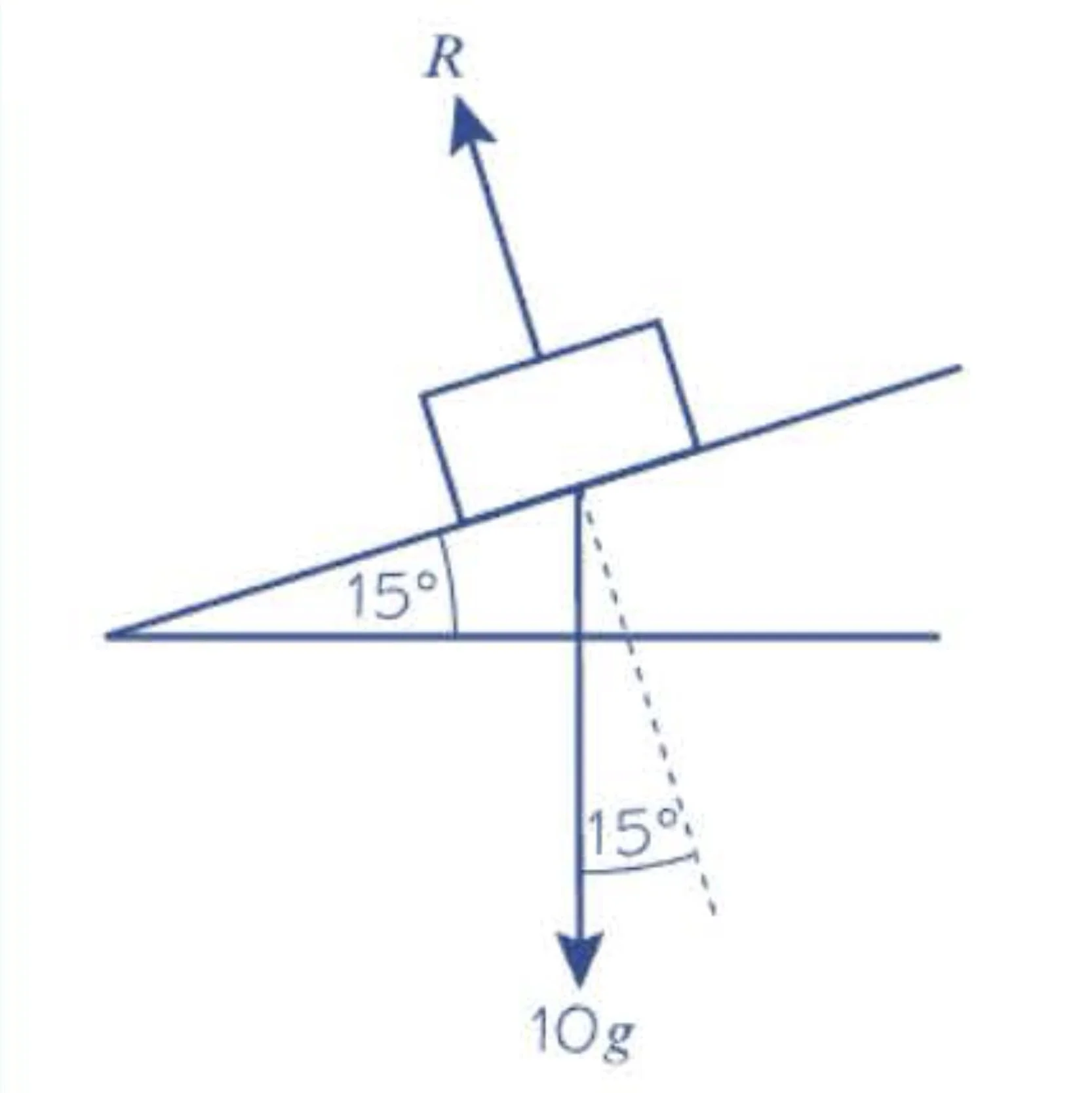
To solve it, they might need to:
Draw a force diagram (mechanics)
Resolve forces using trigonometry (pure maths)
Apply Newton’s second law (physics + maths)
This type of multi-layered thinking is exactly what engineers, scientists, and analysts do in the real world — breaking down complex situations into manageable parts and finding a logical solution.
A Gateway to High-Demand Degrees
Many of the most competitive and rewarding university courses require A-level Maths as an entry ticket. These include:
Engineering
Physics
Computer Science
Economics
Mathematics
Actuarial Science
Even for courses that don’t officially require it, having A-level Maths can make your child’s application stronger and demonstrate that they can handle quantitative work.
Example:
Economics at top universities typically requires at least A-Level Mathematics. Without it, students may find themselves playing catch-up from day one, as first-year topics in statistics, algebra, and calculus build directly on A-Level Maths knowledge.
Career Advantage in a Data-Driven World
Employers love maths because it proves your child can think logically, analyse data, and solve problems; skills that cut across industries. From finance to healthcare, tech to law, almost every sector now needs people who can:
Interpret data
Build models
Check the accuracy of information
See patterns others miss
Example from A-Level Maths:
In statistics, your teen might use hypothesis testing to decide whether a new medicine is effective. That’s the same principle used in clinical trials and market research. These skills are directly transferable to careers in data science, pharmaceuticals, and business analysis.
Preparation for STEM & Technical Roles
If your child is heading into STEM (Science, Technology, Engineering, Maths) or technical careers, A-level Maths isn’t just helpful, it’s essential.
Example from A-Level Maths:
Calculus is used in physics to describe motion, in engineering to design bridges, and in biology to model population growth.
Differential equations appear in climate modelling, electrical engineering, and even epidemiology.
By mastering these topics at A-level, your child is laying the foundation for degree-level STEM study and real-world technical problem-solving.
Sharper Numerical & Data Literacy
The more advanced content in A-level Maths boosts your child’s ability to work with numbers and data in ways GCSE never could.
Example:
When they about regression analysis in statistics, they are doing the same kind of modelling companies use to predict sales trends, sports analysts use to forecast player performance, and environmental scientists use to project climate change effects.
This is a skill that’s becoming more valuable every year as data becomes the currency of modern decision-making.
Transferable Skills That Go Beyond Maths
Even if your child never plans to work in a maths-heavy field, A-level Maths gives them skills they can carry anywhere:
Precision: One misplaced minus sign can throw out a whole problem — a habit of accuracy that’s valuable in law, coding, and finance.
Critical thinking: Your child learns to question assumptions and check if their solution makes sense.
Time management: A-level questions are longer and more involved, so your child learns to plan their approach under time pressure.
Resilience: Some problems will feel impossible — until they keep working and crack them.

Example:
Solving a tricky integration problem in pure maths builds the same persistence one needs when debugging a program, drafting a legal argument, or editing a research paper.
Higher Earning Potential
While no qualification guarantees a high salary, research shows students with A-level Maths often go into careers with higher-than-average earnings. This is partly because:
It qualifies them for high-paying fields like engineering, IT, and finance.
Employers see it as a mark of strong analytical skills
Standing Out form the Crowd
A-level Maths is considered one of the most demanding A-levels. Completing it successfully signals to universities and employers that your child has:
Academic strength
Mental discipline
A willingness to take on challenges
It can make their UCAS application more competitive; especially if they are applying to a course with lots of applicants and limited places.
Final Thoughts
A-level Maths isn’t just an academic hurdle. It’s a toolbox of skills, a passport to opportunities, and a training ground for your child’s brain. Whether they are headed for university, a high-level apprenticeship, or straight into the world of work, it’s one of the smartest choices they can make at 16–18.
Continue reading
Delve deeper into the importance of maths by reading one of the other posts in our blog series Maths Matters here.
