

How I Helped a Year 11 Student Overcome Maths Anxiety Before GCSEs
If the concept of mathematics anxiety is new to you, we recommend starting with our blog series, When Maths Triggers Anxiety, where we explain what maths anxiety is and how it shows up. You can read the first post in the series here.
If you’re the parent of a Year 11 student, maths anxiety may already be a familiar presence in your home. It often shows up as stress, avoidance, frustration, or the quiet belief that “I’m just not a maths person.”
What many parents don’t realise is that maths anxiety has very little to do with ability, and a lot to do with how a student’s nervous system has learned to respond to maths over time.
This is the story of how I helped one Year 11 student reduce their maths anxiety in the lead-up to GCSE exams, using a structured coaching approach that focused on confidence, safety, and gradual exposure rather than pressure.
The Student: Capable, Hardworking, and Stuck in Survival Mode
Sam worked hard, completed homework, and paid attention in lessons, yet maths filled them with dread. Before tests, Sam felt sick. During exams, their mind went blank. At home, revision was something to be endured rather than engaged with. Despite effort, progress felt impossible.
It quickly became clear that Sam didn’t need more maths. They needed a different relationship with maths.
Understanding Maths Anxiety Through the Three Zones
One of the first frameworks I introduce to anxious students (and their parents) is the idea of three learning zones, often visualised as three circles:
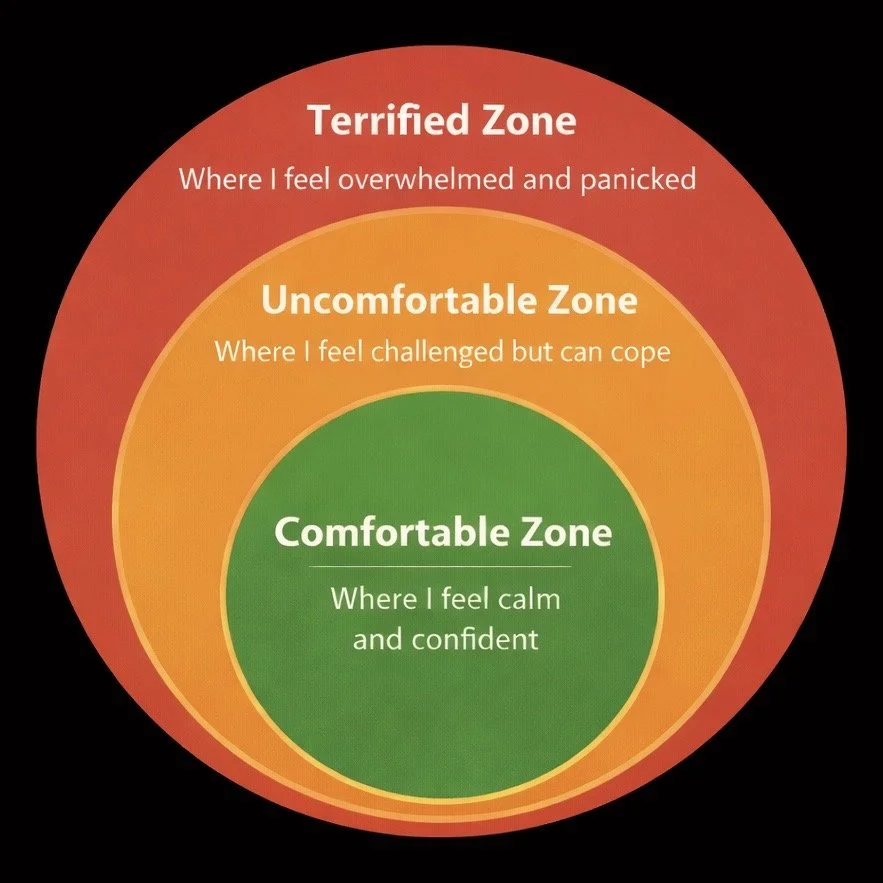
The Comfortable Zone
This is where a student feels safe and calm. Tasks here feel manageable and familiar. There’s little anxiety but also limited growth.
The Uncomfortable Zone
This is where learning happens. The student may feel unsure, challenged, or mildly anxious, but they are still able to think, problem-solve, and engage.
The Terrified Zone
In this zone, anxiety overwhelms the brain. Thinking shuts down, panic takes over, and learning becomes impossible.
When Sam arrived, most GCSE maths lived firmly in the terrified zone. The role of a maths coach is not to push a student harder into this zone but to carefully identify where each zone currently sits and work from there.
Step 1: Identifying the Zones
Early sessions focused on understanding Sam’s experience of maths.
Together, we identified:
Topics that felt safe and familiar (comfortable zone)
Topics that felt tricky but manageable with support (uncomfortable zone)
Situations that caused panic: timed tests, unfamiliar questions, exam-style papers (terrified zone)
This process alone was powerful. Sam began to see that anxiety wasn’t random or personal, it followed predictable patterns. For parents, this distinction is crucial: When a child is in the terrified zone, no amount of explaining or practising will help.
Step 2: Recognising Safety Behaviours
Another key part of maths coaching is identifying safety behaviours — the habits students use to reduce anxiety in the short term, but which keep anxiety alive long-term. I explore safety behaviours in more depth in this post.
Sam’s safety behaviours included:
Avoiding revision until the last minute
Asking for reassurance before every question
Only practising topics they already felt comfortable with
Rushing through questions to “get it over with”
Giving up quickly to escape discomfort
These behaviours made sense. They were Sam’s way of coping. However, safety behaviours prevent students from learning that they can handle discomfort, which is essential for building confidence.
A maths coach helps students notice these patterns without judgement and understand how they maintain anxiety.
Step 3: Creating a Plan to Expand the Comfortable Zone
The goal was not to eliminate anxiety in a week — that would be unrealistic. The goal was to gradually expand Sam’s comfortable zone. We did this through planned, repeated exposure to maths tasks in the uncomfortable zone without safety behaviours. This looked like:
Working on slightly challenging questions, not full exam papers
Sitting with uncertainty instead of seeking immediate reassurance
Allowing mistakes without rushing to correct them
Practising for short, manageable periods
Reflecting afterwards: “What did I cope with?”
Importantly, exposure was gradual and consistent. We didn’t jump from safety straight into panic. Over time, tasks that once lived in the terrified zone moved into the uncomfortable zone, and then into the comfortable zone. That’s how confidence actually grows.
Step 4: Reintroducing Exam Conditions Safely
Only once Sam’s tolerance for discomfort improved did we begin to reintroduce exam-style conditions. Even then, we:
Used short timed sections rather than full papers
Practised calming strategies before starting
Normalised anxiety as a physical sensation, not a danger signal
Reviewed papers with curiosity rather than judgement
Sam learned that feeling anxious didn’t mean they were failing, it meant they were stretching. This shift was transformational.
Step 5: Changing the Story Sam Told About Themselves
At the start, Sam said: “I’m bad at maths.”
Later, it became: “Maths makes me anxious, but I know how to handle it.”
That difference matters more than any grade. When students stop seeing anxiety as proof of inability, they become willing to engage, and engagement is where progress happens.
The Outcome: Calm, Control, and Confidence
By the time GCSE exams arrived, Sam wasn’t suddenly fearless but they were prepared. They understood:
Which zone they were in
What their anxiety felt like
How to stay present without escaping
That one difficult question didn’t define them
This is what effective maths coaching looks like: Not pressure. Not shortcuts. But steady, supported growth.
What Parents Can Take From This
If your child struggles with maths anxiety, remember:
Anxiety is not a lack of ability
Learning cannot happen in the terrified zone
Avoidance and reassurance can unintentionally maintain anxiety
Confidence grows through supported discomfort
The right guidance can change everything
Maths anxiety is learned and with the right approach, it can be unlearned.
A Gentle Next Step
If you recognise your child in Sam’s story, you’re not alone, and support is available. A maths coach can help your child understand their anxiety, build confidence safely, and approach exams with greater calm and resilience. Sometimes, the most important change isn’t what a student learns but how safe they feel while learning it.
